
In the search for the perfect office environment, business owners face a big decision: cubicles or open offices. How you design your office space significantly affects employees’ fulfillment, work quality, and the bottom line. A productive workday often involves balancing quiet time and chat time.
Cubicles offer a private retreat for focused work, whereas open offices spark chance encounters that fuel teamwork. The real challenge is figuring out which layout works for your team. Are you tired of an office that’s just “good enough”? Follow along in this blog by Office Furniture Solutions to weigh the advantages and disadvantages of different solutions. With our expert help, you can unlock a workspace that energizes your team and boosts performance.
What is a Cubicle Office Layout?
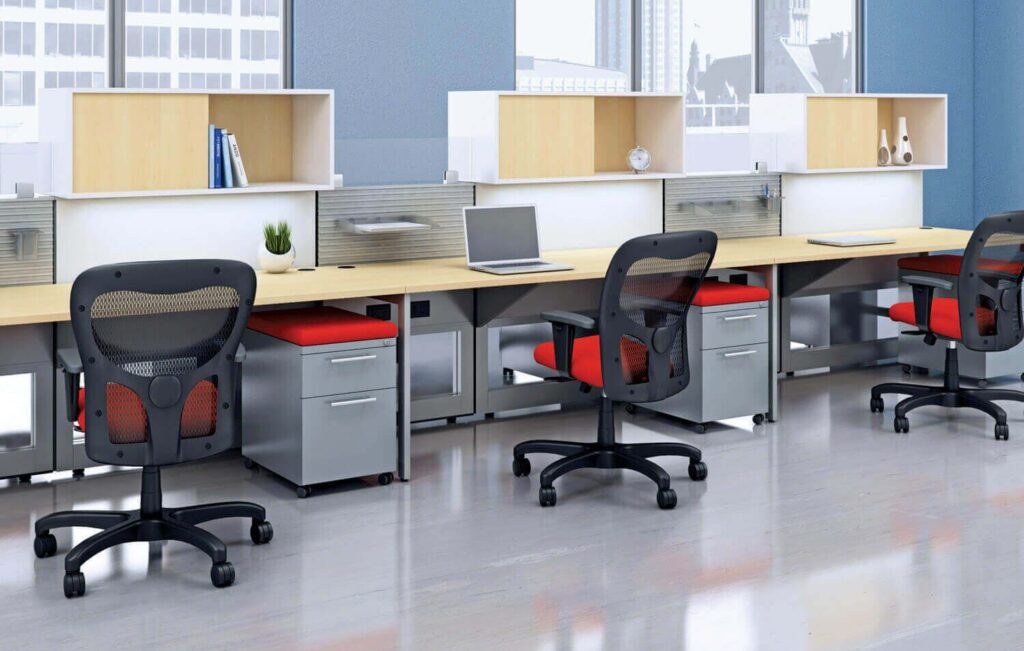
A cubicle office layout features individual workstations surrounded by office partition walls. This layout offers each employee their own private space. Traditional cubicles surround workers with solid barriers. This feature effectively blocks out distractions and ambient noise, leaving room for what matters most — the work itself. When discretion is essential, cubicles step up to the plate, furnishing a private setting where focus and confidentiality can thrive.
Without distractions, workers can commit to tasks without disruptions. The result is improved time management and more output. Office cubicles and workstations also allow employees to feel like they have a “home base” within the office, a space that is theirs to manage and personalize. If you want your team members to truly thrive, give them a sense of ownership. It’s a proven way to boost their job satisfaction and output.
What is the Open Office Space Layout?
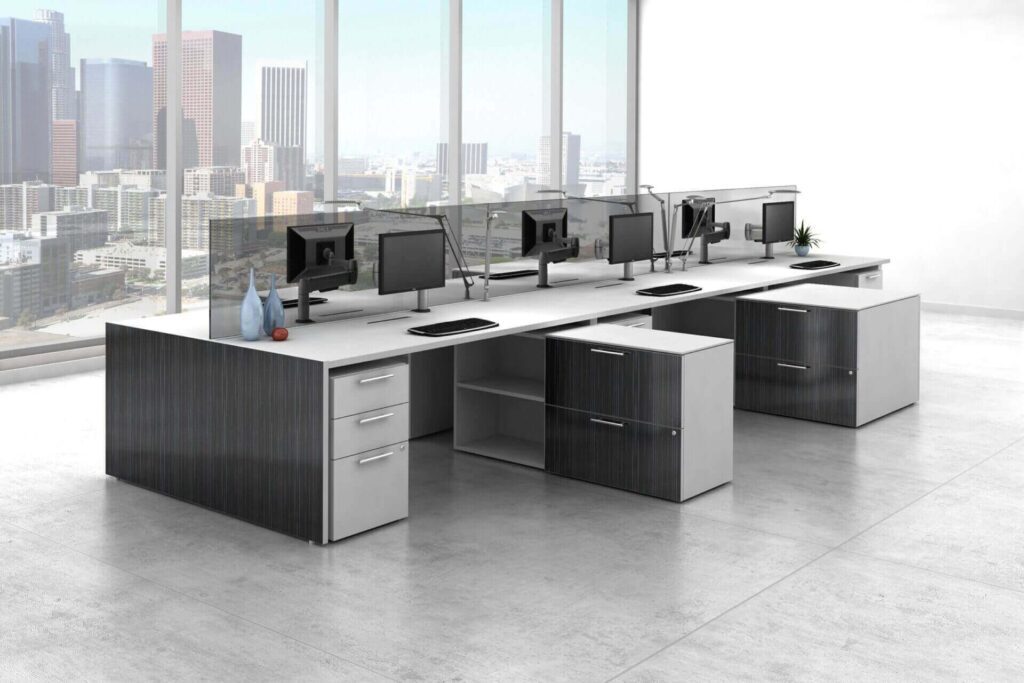
Picture a workspace where collaboration sparks discovery, every conversation counts, and every nook and cranny is useful. That’s what an open office layout provides. Functionality meets style in perfect harmony. It’s more than just a chic update — ditching private offices can actually transform the way you work.
With an open office layout, you’re crafting a work environment that brings people together, fosters open communication, and makes teamwork the norm. In other words, providing a place where company culture can thrive. Employees in this type of setup can move between working solo and collaborating with others. With communication flowing freely, bright ideas are born, and breakthroughs become the norm.
As roles and projects shift, an open layout allows for easy rearrangement of desks and workstations. They can reshape their office to match the demands of each new project or team configuration. Open offices also often come with the added benefit of being budget-friendly.
The Difference Between Cubicles and Open Offices
When choosing an office setup, understanding the distinctions between cubicles and open offices can help align the workspace with your team’s needs. Cubicles provide private, enclosed spaces that can foster focus and confidentiality, while open offices are set up to encourage free-flowing interaction and teamwork. The ideal choice will depend on the nature of your employees’ work and the culture you wish to cultivate.
Privacy and Personal Space
Cubicles provide a degree of privacy and limited personal space that’s hard to achieve in open environments. In a cubicle, employees can make phone calls, focus on work without distractions, and enjoy a space that feels like it’s theirs. An open office environment offers limited privacy, making some workers feel exposed or uncomfortable. For roles where confidentiality and focus are necessary, cubicles provide a solution that open offices can’t match.
Collaboration
Open office layouts foster collaboration naturally. The close proximity and open lines of sight encourage conversation and team-building. Open office environments are particularly suited to projects requiring input from many team members and regular check-ins. However, if your team’s work requires solo focus, cubicles may help prevent interruptions and ease uninterrupted work.
Type of Work and Tasks
When choosing an office layout, the type of work and tasks your team performs is critical. An open office environment caters well to roles requiring creativity and teamwork, while individual tasks that require concentration or confidentiality benefit more from traditional cubicles. For example, customer service roles may need quieter work areas, whereas sales or creative roles thrive in open spaces designed for interaction.
For roles that involve sensitive conversations or data, such as HR or finance, cubicles are a better choice. Employees need an area without distracting pings or noises. Creating an open office space for teams with creative energy will provide them with the space necessary for boundless idea exchange.
Employee Preferences
Consider the varied needs of your staff to craft a work environment that lets people thrive. For example, offering communal areas for collaborative work and private cubicles for tasks that need focus can support all work styles. Employee satisfaction gets a major boost when they’re involved in deciding how the office is set up. They start to feel a sense of pride and ownership in the process.
Noise Levels and Distractions
Though ideal for communication, open office layouts often suffer from higher noise levels. This noise can disrupt employees performing individual tasks. Cubicles are made for intense focus, where the office buzz fades into the background, and you can dive into your work without distraction.
Cost and Space Efficiency
Open offices are typically more budget-friendly, allowing more employees to occupy the same square footage. With fewer walls and partitions, this layout reduces costs on furniture and setup, making it ideal for growing companies or those with limited budgets.
While sometimes more costly, cubicles provide a dedicated space for each employee. They help cut costs related to employee satisfaction and retention by providing a comfortable work environment.
While open offices allow companies to fit more employees into a single area, cubicles are designed to provide individual workspaces, often taking up more room. Companies with strict budget constraints may find open office environments more cost-effective. However, businesses prioritizing privacy and productivity may consider the extra investment in cubicles worthwhile.
Sense of Ownership
Being surrounded by their own walls gives employees a real sense of possession and pride in their workspace. Bringing a personal touch to their workspace, whether it’s decorating with mementos or setting up supplies, can give a sense of control and significantly boost their mood and job satisfaction. A space that’s all their own can completely flip the script, turning a day at the office into a more relaxed affair.
In open workspaces, personalization can still play a role. Employees can add small personal items to their desks, bringing a sense of ownership to their area. This adaptability allows them to make each workspace feel like their own while being part of a more collaborative environment. However, the lack of a permanent, private space may feel less stable for some employees who value having a dedicated workstation. Balancing personal expression with open office functionality can help meet a variety of employee needs and preferences.
Hybrid Office Spaces: The Best of Both Worlds
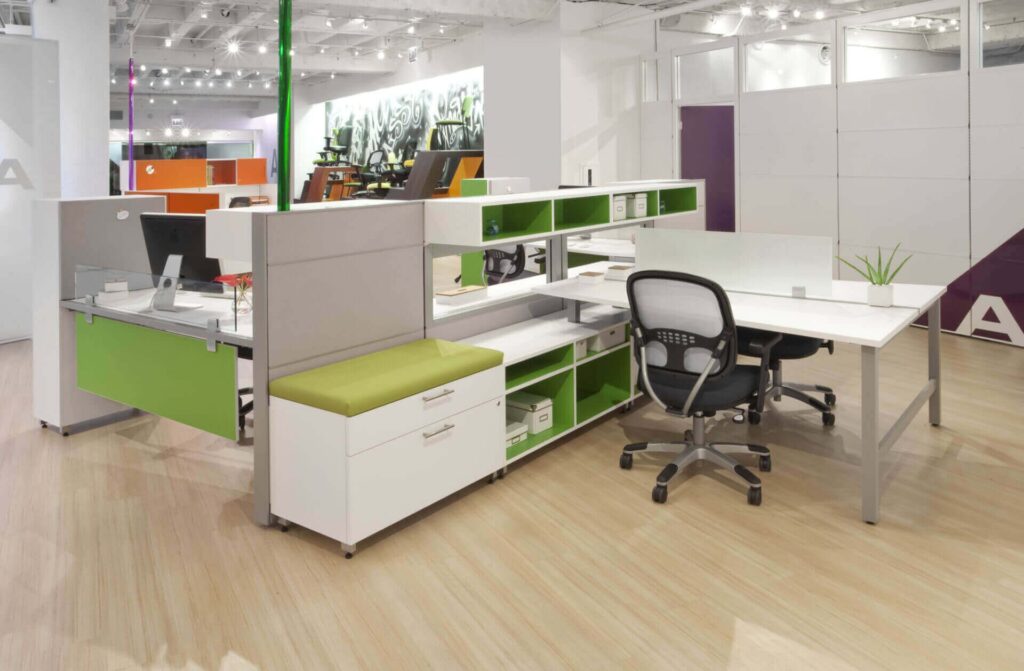
In today’s dynamic work environment, many companies are opting for a hybrid office space that combines the best aspects of both cubicles and open office layouts. This approach allows businesses to cater to various work styles and tasks.
Hybrid office spaces can help teams connect when they need to brainstorm while also offering quieter, more private areas for concentrated tasks. This layout is ideal for businesses looking to enhance flexibility and adapt to the unique preferences of their employees. The benefits of a hybrid space include:
- Enhanced Flexibility: Employees can choose the setting that best suits their needs, switching between private and open areas based on the tasks at hand.
- Increased Productivity: Quiet spaces are available for deep work, while open areas support quick interactions and teamwork, promoting higher productivity.
- Adaptable Design: Hybrid layouts can easily be adjusted as projects and teams evolve, making it easier for businesses to grow and change without extensive redesigns.
- Improved Employee Satisfaction: Giving employees options within their workspace shows consideration for their preferences, often resulting in better morale and reduced turnover.
- Optimal Use of Space: Hybrid layouts make the most of available square footage, ensuring every area serves a purpose and supports company goals.
A hybrid approach also considers individual work habits and comfort, letting employees find a balance that fits their roles and personality. This setup is especially effective in a diverse team where some employees may need quiet for individual work while others thrive in more interactive, open office spaces.
Businesses are shifting away from bland, uniform offices. Instead, they’re incorporating a mix of open desks, private sanctuaries, and cozy nooks to foster an environment where productivity thrives, creative sparks fly, and employees feel valued, inspired, and excited to come to work.
Upgrade Your Office with Office Cubicles for a Productive Workspace
Deciding between cubicles and open office workspaces requires a thoughtful approach, as both layouts offer unique advantages. Traditional cubicles may be your best bet if you prioritize privacy, focus, and individual productivity. Teams that thrive on feedback and brain-picking their colleagues find their stride in open offices.
When your workspace reflects different personalities, you get the best of both worlds. Picture this: your team striding into a workspace designed to fuel their passions, where ergonomic stations and comfortable chairs forge a synergy that keeps them engaged and excited. Whether you’re building a comfy cube for one or a custom office furniture layout for many, Office Furniture Solutions is the go-to office furniture store for what you need.
We believe every business is one-of-a-kind, and so is its ideal workspace. Let us help you figure out what that looks like for you — cubicles, open spaces, or a blend. Transform your office into a comfort zone where productivity thrives. Kickstart your search by browsing our curated selection, from office storage furniture to workstations. You never know what hidden gems you might stumble upon!