
Say goodbye to sluggish afternoons and hello to thriving teams: it all starts with crafting an office layout that truly supports your business. Your office space can either be a drained, gray cubicle farm or a vibrant, thrumming hub of creativity and energy. So, how do you transform it into the latter?
Whether designing a layout from scratch or optimizing an existing workspace, understanding different office styles can help make the best use of available floor space. Consider your team’s daily rhythms, the number of collaborators, and the company’s vibe. These elements heavily influence the best fit.
You can unlock a workspace that fuels productivity and morale by aligning your layout with your team’s unique needs. With that in mind, let’s explore the various office layouts that can revamp your workspace.
What are Office Layouts?
Think of your office layout as the glue that holds your team together. It can either hinder or speed up communication, creativity, and job fulfillment.
So, what makes a workplace hum? Office layouts play a significant role in shaping the dynamics of your team. The physical space where your team works can boost morale and get more done in less time, all under a thoughtful layout.
Imagine walking into the office that makes you smile and is anything but boring. That happens when the office design creates a workspace with people, not just logistics, in mind. It becomes a space where connection, creativity, and focus thrive.
The different office layouts bring something special to the table, making them attractive. Your office, your way — an open, airy atmosphere or cozy, private office — the choice is yours.
Importance of Office Layouts
An office layout is more than just arranging desks and chairs. It shapes how employees interact and perform. Boosting employee happiness and, by extension, output, begins with reimagining the office layout.
Craft a space that addresses distractions, efficiency, and the many ways people work best. Think about it: you can feel it when you walk into a space that truly flows. That’s what a thoughtfully designed office can do.
Companies that thoughtfully curate their spaces stand to reap some impressive rewards. Your office will have vibrant teams that gel, individuals who feel valued, and a significant boost in employee loyalty. Whether your goal is to boost morale or free up more square footage, the way you arrange your office space can make all the difference.
Key Objectives and Benefits of the Right Office Layout
Choosing the ideal office layout goes beyond aesthetics. When the workspace hums, people flourish, and that’s the ultimate goal. Here are some main objectives:
- Boosting Collaboration and Privacy: Some layouts, like the open office layout, encourage team interactions, while private offices and cubicles offer focused work zones.
- Supporting Flexibility: Agile layouts like hybrid offices provide versatile spaces for various tasks.
- Future Expansion and Space Utilization: Effective layouts optimize floor space while allowing room for future growth.
- Enhanced Comfort and Ergonomics: Businesses can create a workspace that meets health and comfort needs with the right office furniture, such as ergonomic chairs and workstations.
Before finalizing that office floor plan, think about the real-world consequences: will it foster collaboration and energy or create distractions and drudgery that sap employees’ enthusiasm? When form meets function, magic happens, and a satisfied, high-performing workforce is often the result.
What are the Different Types of Office Layout?
The beauty of the different types of office layouts is their flexibility. While some companies may opt for a hybrid office design to mix collaborative zones and quiet nooks, others might benefit from low-partition layouts that keep teams close yet avoid the isolation of traditional cubicles.
For larger teams, co-working spaces encourage cross-department collaboration, which can help spark creativity and innovation. And for companies looking for privacy but still want some open space, glass partitions or hybrid layouts bring the best of both worlds. Tailoring the office design to reflect your team’s daily workflow ensures everyone has the right environment to perform at their best.
Productivity and job satisfaction are directly linked to the office layout you choose. It’s vital to weigh the advantages of each option and craft a workspace that works for everyone. These are some of the most popular types of office layouts and what they offer.
Cubicle Office Layout
A cubicle office layout is a classic choice for balancing privacy and collaboration. The floor plan gets a welcoming rhythm with individual cubicles as private workspaces weave with common areas, keeping everyone connected and managers informed. Maximize your floor plan and cut out distractions — that’s what a cubicle office layout helps you do. With built-in meeting rooms nearby, cubicles provide private spaces within a shared office environment.
Traditional Office Layout
Traditional office layouts feature individual offices or rooms with interior walls that reach the ceiling, offering a cellular style workstation setup. Often reserved for senior staff, these private spaces are well-suited for focused work. However, they may limit spontaneous communication, making them less flexible than open or team-based office layouts.
Low Partition Office Layout
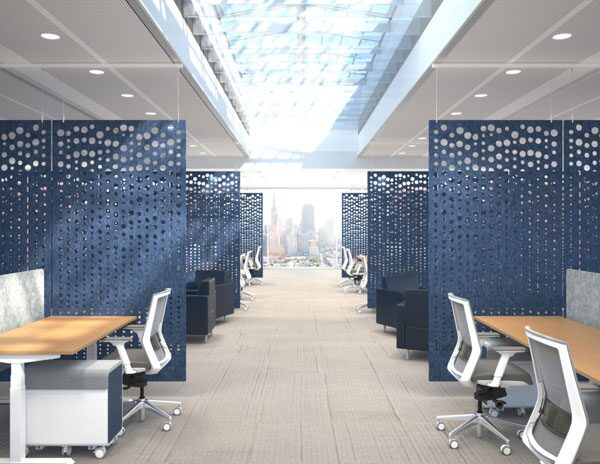
Low partition layouts combine the structure of cubicles with a more open feel. Natural light can pour in by carefully arranging the space, while strategic partitions maintain a sense of seclusion. By doing away with high walls, low partitions encourage a sense of camaraderie and open communication, but they sacrifice some personal space. Employees get personal space while feeling connected to the entire floor.
Co-Working Office Layout
Co-working spaces are ideal for companies looking for flexibility and creativity. In these communal hubs, the lines between workstations blur, making way for relaxed interactions and chance encounters. No two workers are alike, and that’s exactly why co-working layouts strike a balance between independent desks and open spaces for teaming up.
Private Office Layout
A private office layout will provide a dedicated workspace for executives or those handling confidential tasks. This type of individual office layout will offer a serene retreat where employees can buckle down and get stuff done. Private offices may take up more real estate, but the payoff is worth it. They foster an environment of intensity and seclusion that’s hard to find elsewhere.
Open-Plan Office Layout
An open-plan layout is popular for promoting interaction and easy communication among teams. In this setup, desks and office workstations have cubicles arranged with minimal partitions. While open offices can boost employee morale, they may also introduce distractions if not managed well. Open plans work best for collaborative and creative industries where teamwork is encouraged.
Team-Cluster Office Layout
A team based office layout is a design that focuses on grouping employees by teams, allowing members to collaborate on projects with minimal need for separate meeting rooms. What results is an atmosphere where team members feel comfortable speaking up, sharing insights, and merging their skills to achieve a common goal. However, it may not provide the private space that some employees need for focused tasks.
Hybrid Office Layout
The hybrid office layout is an adaptable, versatile style that combines elements of different layouts. It includes areas dedicated to silent work and others where spontaneous ideas can flow. This approach makes it possible for businesses to cater to diverse work styles. Employees no longer have to choose between comfort and flexibility. Hybrid offices blend the two seamlessly, resulting in a workspace as adaptable as it is inviting.
What are the Different Types of Office Partitions?
Within any office, strategically placed partitions bring organizational clarity, sharply defining distinct areas while controlling the flow of sound.
Glass Partitions
Glass partitions create transparent barriers that provide visual privacy without isolating employees. Noise levels drop while sunlight pours in with this partition design, fostering a more focused and inviting office atmosphere. Offices with a modern vibe get a two-for-one deal with glass partition walls that serve privacy without sacrificing openness.
Solid Partitions
Solid partitions, often made of wood or metal, are perfect for creating closed-off spaces within an office. Do employees need to hash out sensitive details without an audience? Set up shop behind one of these screen walls and breathe easy. Partitions are like mental cliffs: they keep distractions from creeping in and splintering concentration.
Acoustic Partitions
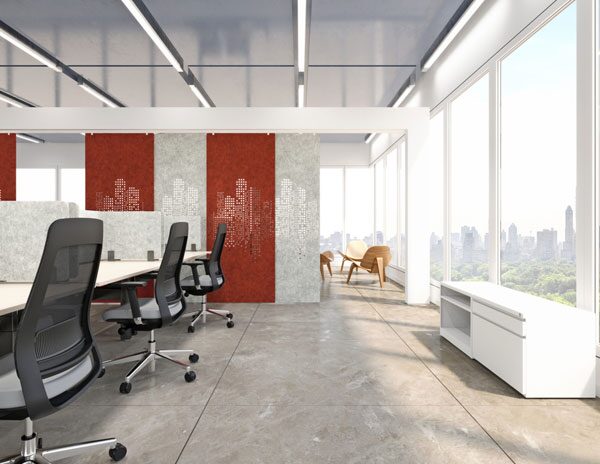
Acoustic partitions are designed to reduce sound, making them ideal for open-plan and co-working spaces where noise might interfere with focused work. With these partitions in place, the din of the office fades away, replaced by an atmosphere of calm focus, where employees can switch into high gear, unbothered by disruptions, and achieve their best work.
Partitions allow companies to create dedicated workspaces without permanent walls. A workspace that adapts to changing needs lets you create a layout that flows with your priorities, giving you focused individual areas and energetic team hubs.
Tailoring Spaces for Every Need
Choosing the right office layout is crucial for creating a productive and comfortable work environment. Office Furniture Solutions offers a wide range of office furniture, from ergonomic office chairs and desks to office storage furniture and partition walls.
Our office furniture store has you covered with quality options supporting various work styles and layouts, helping you design your team’s most suitable office layout. Visit Office Furniture Solutions today to discover how our products can transform your work space into a hub of productivity and comfort.